CITES 2026 Speakers
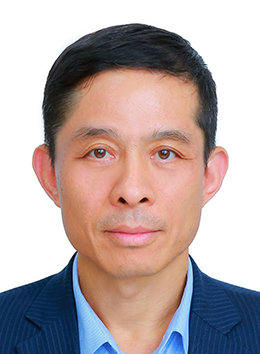
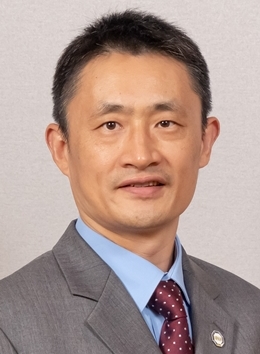
Prof. Benjamin Zongbin Yue |
Keynote Lecture: Energy Storage for Secure and Low-carbon Power Supply in Macao Abstract: As the world moves toward a decarbonized future, energy storage will become as central to energy systems as generation, transmission and distribution are today. Considering the special scenarios in Macao as a tiny international city with very high power-load density and population density, energy storage technology may play important roles in several ways: Biography: Benjamin Yue joined CEM in 1999. He has been involved in the areas of power system planning, operation, and customer services for more than 30 years. He currently serves as Principal Advisor to the Executive Committee. Mr. Benjamin Yue holds a Bachelor's degree and a Master's degree in Power System and Automation from Shandong University. He also earned a Master's degree of Business Administration and an Advanced Diploma in Finance from University of Saint Joseph, as well as a Doctorate of Business Administration from the University of Macau. In addition, he is a senior member of the Institute of Electrical and Electronics Engineers (IEEE), and has been actively participating in operation of the Macau Institute of Electrical and Electronics Engineers for many years.
|
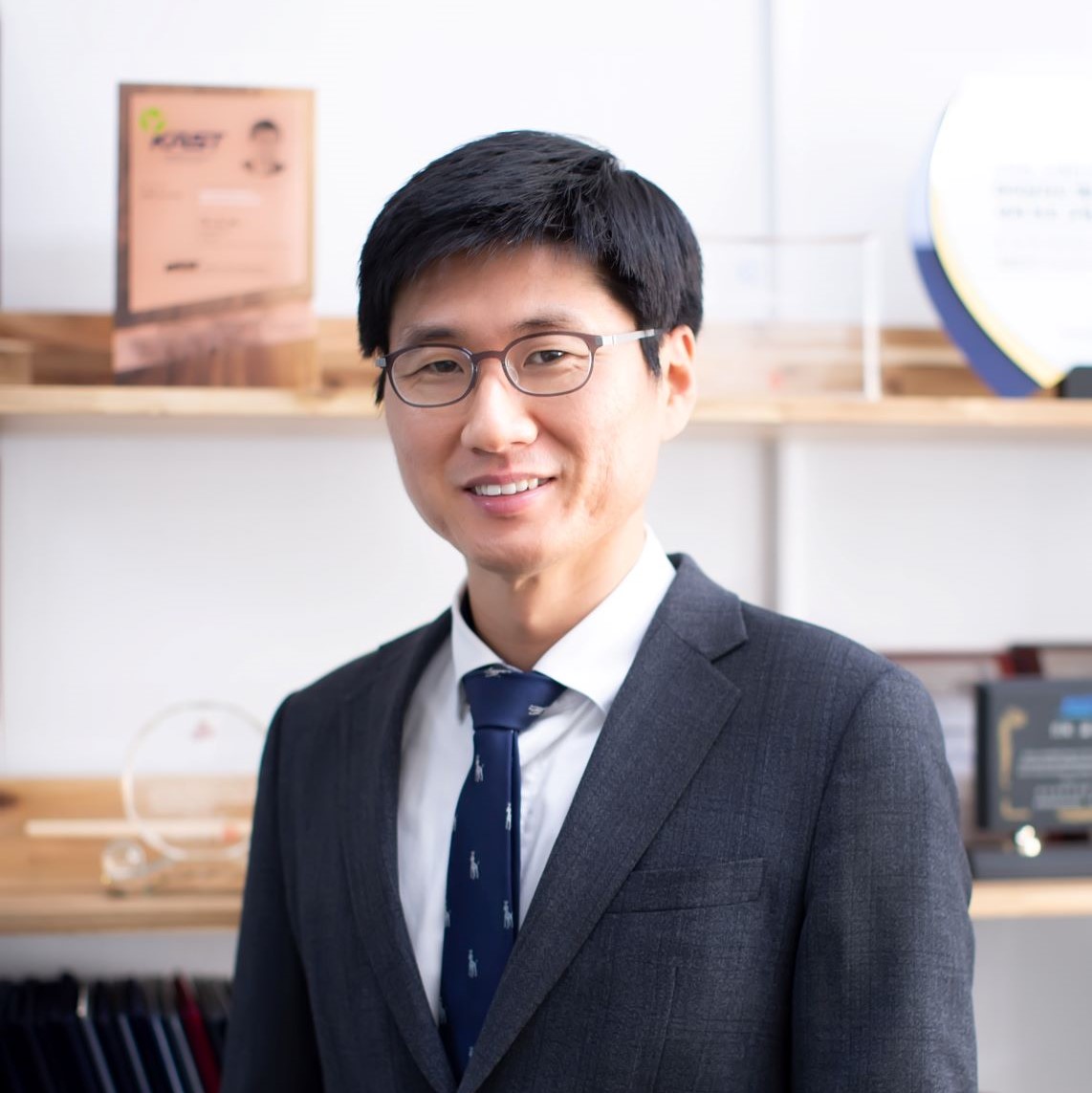
Prof. Minhua Shao |
Keynote Lecture: Development of high performance and durable fuel cell electrocatalysts Abstract: Low temperature fuel cells are electrochemical devices that convert chemical energy directly to electricity. They have great potential for both stationery and transportation applications and are expected to help address the energy and environmental problems that have become prevalent in our society. Despite their great promise, commercialization has been hindered by lower than predicted efficiencies and high loading of Pt-based electrocatalysts in the electrodes. For more than five decades, extensive work has been focused on the development of novel electrocatalysts for fuel cell reactions. In this talk, I will present recent progress in developing advanced electrocatalysts and their fuel cell performance in my group, with an emphasis on core-shell and non-precious metal materials. Biography: Professor Minhua Shao is the Head and Chair Professor of Chemical and Biological Engineering and the Director of HKUST Energy Institute. He earned B.S. and M.S. degrees in chemistry from Xiamen University in China, and a Ph.D. degree in materials science and engineering from State University of New York at Stony Brook in 2006. Before joining the HKUST, Prof Shao worked at UTC Power on fuel cells and Ford Motor Company on lithium-ion batteries in the United States. He was a UTC Technical Fellow during his tenure with UTC Power. Prof Shao’s research interests include advanced materials for energy conversion and storage devices, and fundamental understandings of related electrochemical reactions. Prof Shao has particular interests in fuel cells, lithium-ion batteries, solid state batteries, CO2 reduction, water splitting, electrocatalysis, DFT calculations and nanomaterials. He has published more than 210 peer-reviewed papers with over 20000 citations (h-index = 64), 1 edited book, 5 book chapters, and filed more than 30 patent applications (19 issued). He has received a number of awards, including the Supramaniam Srinivasan Young Investigator Award (ECS Energy Technology Division). He is an Associate Editor of Journal of the Electrochemical Society (2017- ) and one of the founding members of Young Academy of Science of Hong Kong.
|
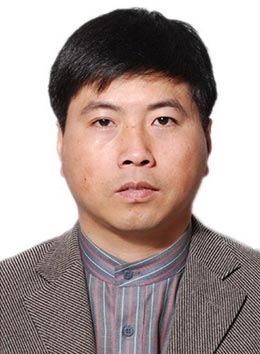
Prof. Ho Seok Park |
Keynote Lecture: Electrolyte and Interfacial Engineering for Aqueous Zn Metal Batteries and Beyond Abstract: Aqueous Zn metal batteries are very attractive owing to their high theoretical capacity, natural abundance, and high safety. However, the practical application of aqueous Zn metal batteries are deteriorated due to Zn dendrite formation and corrosion, and gas evolution. In this talk, I will introduce two kinds of multifunctional electrolyte additives based on stereoisomers and zwitterionic compounds for reversible Zn deposition. These multifunctional electrolyte additives can modulate interfacial and solvated structures as well as form a robust and uniform SEIs for anodeless Zn metal batteries. Finally, divalent and halide dual-ion storage materials as a cathode candidate will be introduced for an energy-dense aqueous divalent metal-halogen battery and beyond for sustainable wastewater-energy nexus. Biography: Ho Seok Park is a direct of Center for 2D Elementary Redox Energy Storage (2DRES), a direct of Center for Next-Generation Energy Materials, a full professor of Chemical Engineering at the Sungkyunkwan University (SKKU), and an adjunct professor at the Samsung Advanced Institute for Health Science & Technology (SAIHST) and SKKU Institute of Energy Science and Technology (SIEST).
His current research interests focus on electrochemical energy storage and conversion devices based on 2D and carbon nanomaterials and polymer electrolytes. He has published ~400 papers in the top journals, including Nature Materials, Joule, Chem. Rev., Chem. Soc. Rev., Energy & Environ. Sci., Nature Commun., JACS, Adv. Mater., Angew. Chem. Int. Ed., etc, and been taking associate and guest editor and editorial board member in the SCI(E) journals of Adv. Energy Mater., Adv. Funct. Mater., Energy Storage Materials, InfoMat, eScience Energy, Watt, Batteries & Supercaps, J. Phys. Energy, and so on.
He has been recognized by several awards including the Korean Academy of Science and Technology (KAST) Member, Commendation from Ministry of Science and ICT Minister, EnSM Young Scientist Award, S-OIL Young Scientist Award, National R&D Excellence 100 (2019 and 2025), the Scientist of the Month, the LG Yeonam Fellowship, the SKKU Nobel Prize, and so on.
|
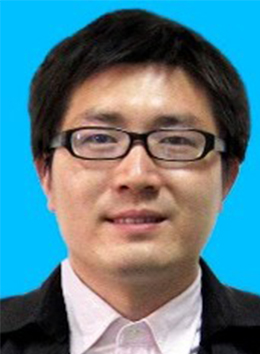
Prof. Gangui Yan |
Keynote Lecture: Energy Storage Planning for Solving the Coexistence of Wind-Solar Curtailment and Power Shortage in New-type Power System Abstract: Facing the coexisting of renewable energy curtailment and power shortage resulting from insufficient regulation capability in power systems with high penetration of renewable energy, this presentation conducts systematic research in three main aspects. Firstly, it investigates a time-series coupling-based method for simulating and generating wind power, photovoltaic power and load profiles, and further establishes a quantitative characterization method to evaluate the curtailed and insufficient power and energy under the existing system regulation capacity. Secondly, a collaborative optimal planning method for multiple types of ESSs is proposed. Thirdly, a transmission bottleneck expansion enhancement strategy is developed to break the constraints of power grid operation and fully tap the potential of ESSs. Biography: Gangui Yan, Professor and Doctoral Supervisor at Northeast Electric Power University, serves as the Director of the Key Laboratory of Modern Power System Simulation and Control & New Green Power Technology of the Ministry of Education. He is a national-level talent, recipient of the National Outstanding Professional and Technical Talent and National Model Teacher honors, Senior Members of CSEE and IEEE, and a member of the Working Committee and Standing Director of CSEE. Additionally, he acts as an editorial board member for six journals. His research focuses on the planning, operation and control of large-scale renewable energy penetrated power system, stability analysis of power-electronic dominated power system, and comprehensive utilization of flexible loads. He has presided over three National Natural Science Foundation projects including one Key Project, and participated in more than ten national research projects. He has won two Second Class National Science and Technology Progress Awards, two First Class (1st and 2rd contributor) and two Second Class Jilin Provincial Science and Technology Progress Awards (2nd and 3rd contributor), as well as two Second Class National Teaching Achievement Awards (3rd and 4th contributor). He has published over 120 SCI/EI indexed papers and holds more than 40 authorized invention patents.
|
Prof. Zhijun Zhang |
Keynote Lecture: Design of Brain-Like Time-Varying Neural Networks and Multimodal Sensing and Control Techniques for Embodied Intelligent Systems Abstract: Facing the challenges of high real-time and accuracy requirements for embodied intelligent perception decision execution closed-loop in dynamic open environments, traditional static neural networks and time invariant control architectures are difficult to match with environmental disturbances, ontology dynamic drift, and asynchronous temporal changes in multimodal sensing. There are bottlenecks such as lagging temporal modeling, slow dynamic convergence, and disconnected perception control coupling. This report systematically elaborates on the architecture design of time-varying neural networks, the biological mechanisms of learning theory, real-time convergence theory, and the integration of perception and control. Firstly, the evolution of dynamic neural networks such as Hopfield network, gradient neural network, and zeroing neural network is sorted out, and the core design mechanisms of time-varying neural network dynamic factor design and disturbance resistant adaptive update are analyzed. In response to the real-time pain points of embodied intelligent perception and motion planning, the theory of time-varying weight neural network is proposed, and the convergence is strictly proved from the perspective of Lyapunov stability. Secondly, an integrated framework of "time-varying perception representation dynamic environment prediction adaptive closed-loop control" is constructed, utilizing time-varying neural networks to achieve multimodal temporal fusion perception and establish a low latency mapping path from perception information to motion instructions. Finally, demonstrate the application of this solution in scenarios such as precision grasping of robotic arms, dynamic obstacle avoidance of mobile robots, and full body control of humanoid robots. The report summarizes the design principles and application scenarios of time-varying neural networks, and looks forward to key research directions such as continuous discrete hybrid time-varying networks for general embodied intelligence, software and hardware collaborative optimization, and virtual real transfer adaptive learning. It provides theoretical references and engineering paradigms for the development of intelligent control systems for dynamic robots. Biography: Prof. Zhang Zhijun is a full professor and doctoral supervisor at the School of Automation Science and Engineering, South China University of Technology. He is an IEEE Fellow, Chair of the IEEE Guangzhou Section, Director of the Guangdong Provincial Key Laboratory of Large Model Embodied Intelligent Humanoid Robots, and Deputy Chief Engineer of the Super Robotics Institute (Huangpu). He is a recipient of the National Youth Talent Program and the Guangdong Distinguished Young Scholar Fund, and has been named a Stanford Top 2% Most-Cited Scientist with Lifetime Impact. Prof. Zhang pioneered the concept of "interpretable, provable, and deployable dynamic time-varying weight neural networks with real-time learning capability," revealing the mechanisms of neuronal plasticity and growth under continuous learning. His work overcomes the rigidity of traditional deep models and large-scale agents, establishing a biologically plausible, self-adaptive neural framework that enables embodied robots with brain-like, lifelong, and interactive learning—a paradigm shift from static algorithms to dynamic, developmental intelligence. He has published over 180 papers in leading journals (including Nature sub-journals and IEEE Transactions) and conferences, with more than 140 SCI-indexed articles, along with 5 books/textbooks. He holds 77 authorized invention patents and 5 international PCT patents. He has led over 30 major research projects, with multiple patents commercialized through industry investment. His research earned the CAA Youth Science and Technology Award (2024), the Guangdong First Prize for Technological Invention (2025), and the Jiangxi First Prize for Science and Technology Progress (2025). He serves on multiple CAA and CSIG technical committees and as editorial board member for several international journals.
|