CITES 2026 proposals for Special Sessions should fall within the technical scope of the conference. Special Sessions serve as an important supplement to the regular program, aiming to showcase state-of-the-art research from academia and industry on specialized, innovative, challenging, and emerging topics. Proposals should be submitted by the prospective organizer(s), who are expected to serve as the Chair or Co-Chair and take responsibility for the overall organization of the session, including promotion, coordination of submissions, and management of the review process. Each Special Session is scheduled for 2 hours and typically accommodates 6–10 oral presentations; if the number of accepted contributions exceeds the available capacity, some presentations may be arranged as posters. Accepted and presented papers will be included in the conference proceedings and submitted to relevant databases in accordance with the conference policy.
• Proposal Submission Deadline: February. 25, 2026
• Acceptance Notification Deadline: March. 30, 2026
________________________________________
• Proposals Submission Guidelines
Proposal Template is provided indicating: Title; Introduction and Topics; Organizer's Information, etc.
Please complete the special session proposal form and send to cites@hkaasr.org before the deadline.
DOWNLOAD PROPOSAL HERE!
Special Session 1: AI-Empowered Next-Generation Battery Energy Storage Systems: From Intelligent Management to Safe Operation
Chair:
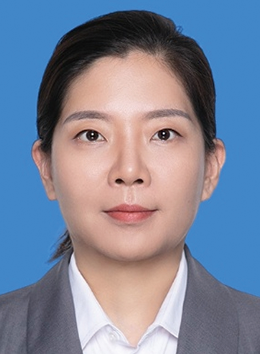
Hui Hou (Professor, Wuhan University of Technology)
|
Vice Chair:

Peng Wei (Associate Researcher, Wuhan University of Technology)
|
|
Description of the Session:
With the large-scale deployment of electrochemical energy storage in electric vehicles, smart grids, and renewable energy integration, the safety, reliability, and economics of battery systems have become core challenges to high-quality industrial development. Traditional management methods struggle to address complex, nonlinear, and coupled issues such as battery aging, inconsistency, and thermal runaway under diverse operating conditions. This special session aims to explore how advanced artificial intelligence (AI), machine learning, and big data analytics can revolutionize the management and operation of battery energy storage systems.
The session focuses on cutting-edge technologies for precise battery state sensing, intelligent fault diagnosis, safety early warning, and life-cycle operation optimization. It emphasizes the integration of data-driven approaches with physical models to develop next-generation battery management systems for complex scenarios. We cordially invite researchers, experts, and engineers from academia and industry to share their latest findings and foster interdisciplinary collaboration, aiming to advance energy storage technology toward greater intelligence, safety, and efficiency.
Related Topics:
· Data-driven Multi-dimensional State Estimation of Batteries
· Fault Diagnosis and Safety Early Warning for Battery Systems
· AI-Empowered System Coordination and Optimization
· Digital Twins and Multi-Scale Modeling
· Data-driven Reliability, Safety, and Emerging Methods
|
Special Session 2: Energy Storage-Enabled Optimization and Control of Urban Power Systems with High Penetration of Distributed Energy Resources
Chair:

Liang Yuan (Lecturer, Central South University)
|
Vice Chairs:

Jingjie Huang (Associate Professor, Changsha University of Science and Technology)

Yubin Jia (Post-Doctoral Researcher, Southeast University)

Jianheng Lin (Researcher, Central South University)
|
|
Description of the Session:
Urban power systems are facing increasing operational challenges due to the rapid integration of distributed energy resources, energy storage systems, electric vehicles, flexible loads, and power-electronic converters. These resources provide valuable flexibility for low-carbon urban energy supply, but also introduce uncertainties, bidirectional power flows, voltage and frequency security issues, and coordination difficulties across source-grid-load-storage resources.
This Special Session focuses on recent advances in energy storage-enabled optimization and control for urban power systems with high penetration of distributed energy resources. Topics of interest include coordinated dispatch, stability control, converter-interfaced resource management, resilience-oriented operation, data-driven decision-making, and practical applications in smart distribution networks, microgrids, and urban energy systems.
Related Topics:
· Storage-enabled Urban Power System Optimization
· Source-Grid-Load-Storage Coordination and Flexibility Management
· Converter-dominated Distribution Network Stability and Control
· AI-driven Forecasting, Monitoring, and Autonomous Control
· Resilient Operation under Extreme Events and Contingencies
· Digital Twins and Cyber-Physical Energy Management
|
Special Session 3: Energy storage systems and Integrated energy system applications
Chair:

Rui Wang (Lecturer, Ningbo University)
|
Vice Chair:

Da Lin (Professor Senior Engineer, Electric Power Research Institute of State Grid Zhejiang Electric Power Co., Ltd)
|
|
Description of the Session:
Energy storage systems and Integrated energy system are crucial for green electricity consumption, energy efficiency enhancement, and power system safety. The key applications include cost reduction and efficiency improvement in industrial parks, performance evaluation and optimization of hybrid energy storage systems, optimization of multi-energy complementary integrated energy systems, and fault diagnosis and safety of critical infrastructure. This session covers multiple research directions, such as energy storage technology, integrated energy technology, and integrated energy management technology. The target of this special session is to deepen exchanges and cooperate with scholars, engineers, and industry professionals worldwide.
Related Topics:
· Energy management of intelligent energy storage systems
· Evaluation and optimization of hybrid energy storage systems
· Optimization of multi-energy complementary integrated energy systems
· Fault diagnosis and safety of critical infrastructure
· Integration and coordinated control of multi-type hybrid energy storage systems
|
Special Session 4: Flexible Resources for Advanced Power Systems
Chair:

Xiangyu Li, Assistant Professor, The Hong Kong University of Science and Technology (Guangzhou)
|
Vice Chairs:

Bo Wang (Associate Professor, Hohai University)

Linwei Sang (Associate Professor, Southeast University)
|
|
Description of the Session:
This special session focuses on the critical role of flexible resources, including demand response, energy storage, electric vehicles, and distributed generation, in supporting reliable and efficient grid operation amid increasing renewable penetration. Contributions are invited on topics related to planning, aggregation, optimization, and dispatch of flexible resources, with strong interest in advanced methodologies such as artificial intelligence, optimization technology, and data driven control. Theoretical studies, simulation based work, and real-world implementations are all welcome.
Related Topics:
· Aggregation and coordination of distributed energy resources
· Real time dispatch and control under uncertainty
· Virtual power plants and scalable flexibility management
· AI based forecasting and decision making for flexible resources
· Market design, pricing, and incentive mechanisms for flexibility
· Cyber security and privacy in flexible resource coordination
· Resilience oriented scheduling using flexible resources
· Flexibility quantification, valuation, and benchmarking
· Digital twins and edge intelligence for flexibility management
|
Special Session 5: Optimal Operation and Planning of Hybrid Energy Storage for Low-carbon Energy Systems
Chair:
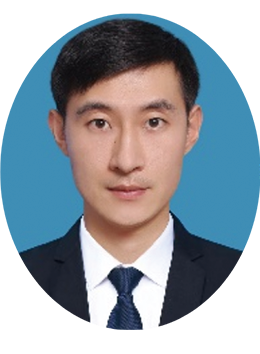
Kuan zhang, (Associate Professor, School of Electrical and Electronic Engineering, North China Electric Power University)
|
Vice Chairs:

Zhihao Hua (Postdoctoral Fellow, The Hong Kong polytechnic university)

Yingping Cao (Postdoctoral Fellow, The Hong Kong polytechnic university)
|
|
Description of the Session:
With the large-scale integration of renewable energy into power systems, single-type energy storage can hardly meet the diversified demands for power regulation, energy supply and service reliability. Hybrid energy storage systems (HESS), such as electricity, heat, hydrogen, ammonia, have become a key technical solution relying on complementary characteristics of different storage technologies. This special session focuses on the latest theories, methodologies and engineering practices of hybrid energy storage. It gathers scholars and industrial experts to discuss system modeling, optimal dispatch, capacity planning, coordinated control and practical application of HESS in power grids and integrated energy systems. The session aims to share cutting-edge research achievements, tackle technical challenges, and promote the industrial application and technological innovation of hybrid energy storage.
Related Topics:
· Basic modeling, characteristic analysis and performance evaluation of hybrid energy storage systems
· Real-time optimal operation and dispatch strategies for hybrid energy storage
· Multi-objective planning and capacity configuration of hybrid energy storage
· Coordinated control technology of multi-type hybrid energy storage (battery, supercapacitor, flywheel, heat, hydrogen, ammonia etc.)
· Application of hybrid energy storage in renewable-dominated power systems
· Economic analysis and operation benefit evaluation of hybrid energy storage projects
· Fault diagnosis and safety operation technology of hybrid energy storage systems
|